A Step-by-Step Guide to Stamped Concrete Installation
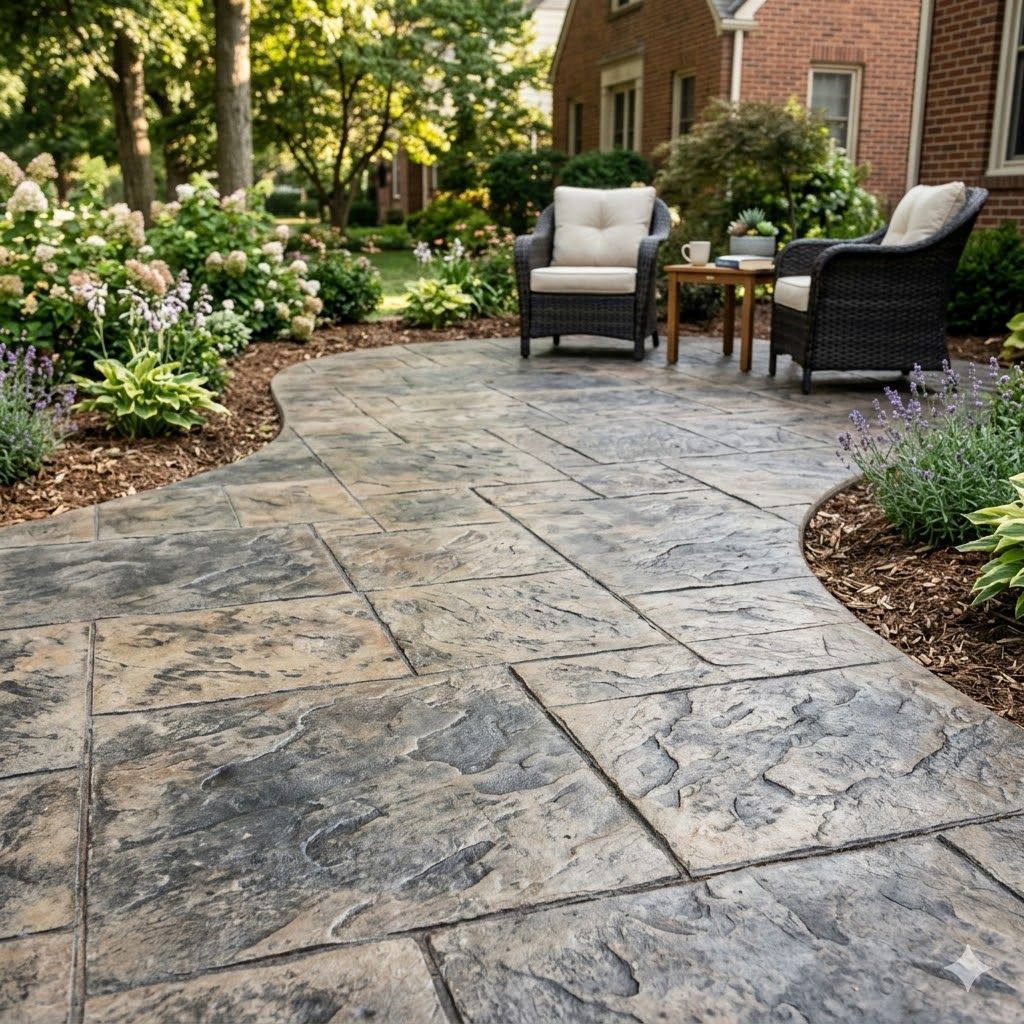
Let’s be honest: standard gray concrete is fine for a sidewalk, but for your main outdoor living space? It’s a little... boring. Stamped concrete is the "chameleon" of the construction world. It can look like slate, cobblestone, brick, or even wood planks, but it has the durability and price point of concrete.
However, stamping isn't like regular concrete pouring. It’s an art form. You are working against a ticking clock, and in Youngstown, you’re also working against the humidity and the ever-changing Ohio sky.
Here is how we (and you!) can get a flawless finish.
Step 1: The Vision and Layout
Before the first shovel hits the dirt, you need a plan. Are you looking for a stamped concrete patio or a decorative driveway?
You need to pick your:
Pattern: Ashlar slate and wood plank are huge in Ohio right now.
Color: You’ll usually pick a base color and a "secondary" highlight color.
Slope: Just like we talked about in our foundation guide, your concrete must slope away from your house to prevent foundation cracking.
Step 2: Site Prep (The Youngstown Special)
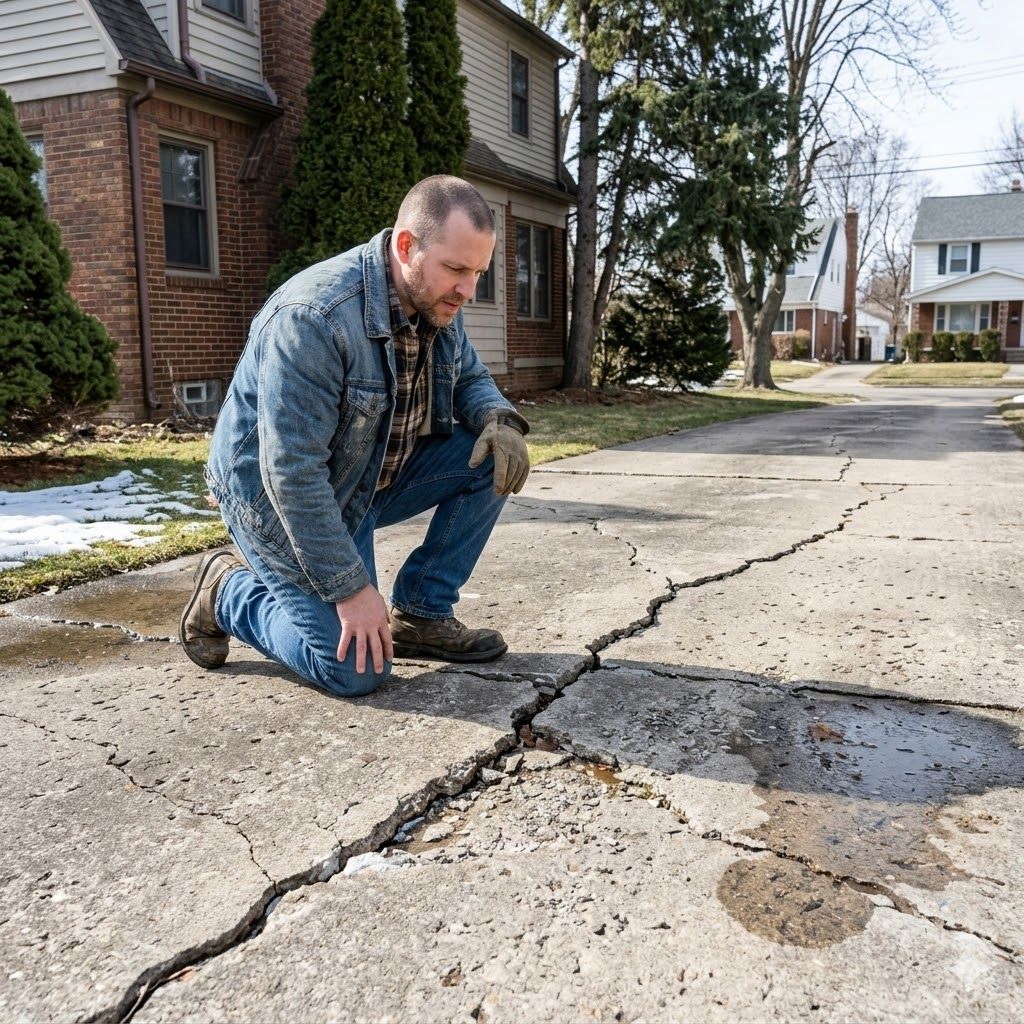
In Youngstown, our soil is heavy on clay. If you pour stamped concrete directly on clay, the winter freeze will crack it before the snow melts.
You must dig out the area and lay down 4 to 6 inches of compactable gravel. Use a plate compactor until that ground feels like a parking lot. If your contractor skips the gravel, they are "ghosting" you on the most important part of the job.
Step 3: Setting the Forms and Reinforcement
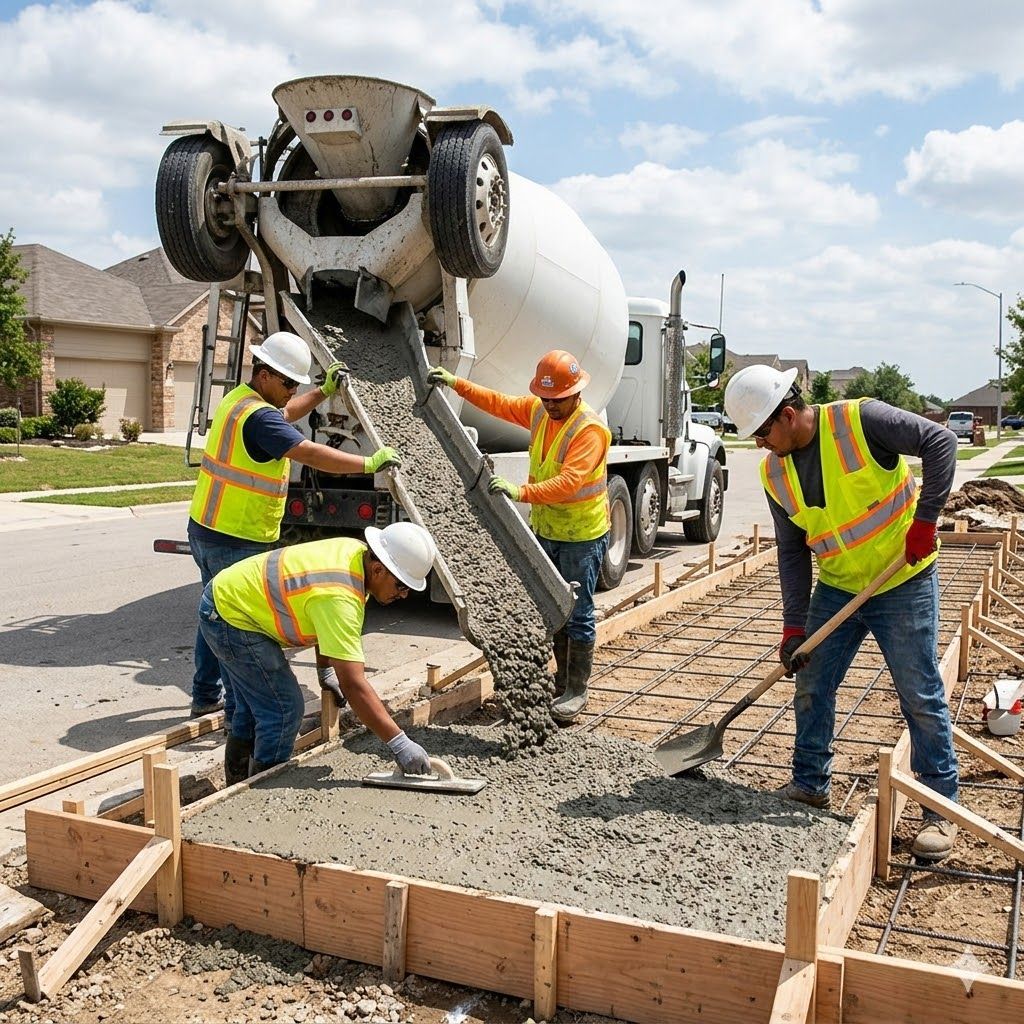
We use 2x4 or 2x6 lumber to create the "mold" for your project. Once the forms are in, we add the "bones"—either rebar or wire mesh. For a high-end stamped concrete service, we also recommend using fiber-reinforced concrete. It adds thousands of tiny supports throughout the slab to keep those beautiful patterns from splitting.
Step 4: Adding the Color
There are two main ways to color stamped concrete:
Integral Color: The color is mixed into the truck. The whole slab is the same color all the way through.
Color Hardener: A powder is thrown onto the wet surface. This creates a very vibrant color and makes the surface harder.
In the Steel Valley, we often prefer integral color because if you accidentally chip the concrete with a snow shovel, the color underneath is the same!
Step 5: The Pour and Leveling
When the truck arrives, it's go-time. You spread the concrete, "screed" it (level it with a board), and use a bull float to smooth the surface. You can’t start stamping yet! You have to wait for the "bleed water" to disappear. If you stamp too early, the texture will be blurry. If you stamp too late, you won't get any impression at all.
Step 6: The Release Agent
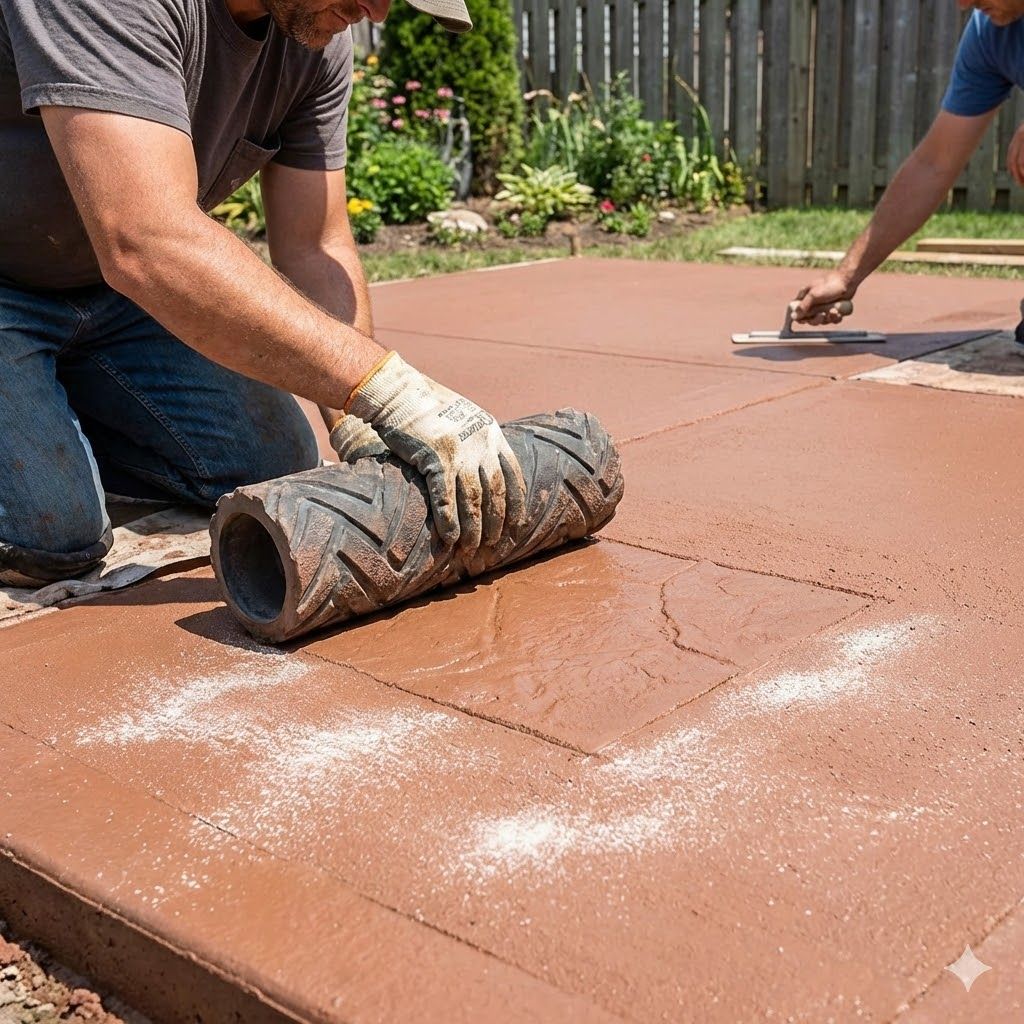
This is the secret sauce. You apply a "release agent" (usually a powder) over the wet concrete. It does two things:
It stops the stamps from sticking to the wet concrete (like flour on a rolling pin).
It provides that "antique" look by settling into the deep grooves of the pattern.
Step 7: The Stamping Process
This is where the magic happens. You lay the heavy rubber stamps down in a sequence. You have to walk on them (or use a "tamper") to press the pattern into the mud.
Pro Tip: Always have a "floppy" stamp. This is a thinner, flexible stamp used to get the pattern right up against the edges of your house or the forms.
Step 8: Washing and Detailing
After 24 hours, you wash off the excess release agent. This is the big reveal! You’ll see the primary color and the darker "antique" highlights in the cracks. We also use a small saw to cut control joints. Even beautiful stamped concrete in Ohio needs joints to handle the expansion and contraction of our weather.
Step 9: Sealing (The Finish Line)
Once the slab is dry, you apply a high-quality acrylic sealer. This makes the colors "pop" and protects the concrete from oil, salt, and UV rays.
Stamped Concrete Authority Quote
"Stamped concrete is 50% construction and 50% art. The difference between a patio that looks like real stone and one that looks like a cheap plastic mold is all in the timing of the stamps and the quality of the antique release." —
Vince, 30-Year Paving Veteran in Youngstown
Home Value Statistic
According to data from
The Concrete Network, adding a professional
stamped concrete patio can increase a home’s resale value significantly, often providing a
Return on Investment (ROI) of up to 70-80%. In the Youngstown market, where outdoor living space is a top priority for buyers, it’s one of the smartest upgrades you can make to your concrete installation.
Why Youngstown Homeowners Choose Pro over DIY
Look, we love a DIY project as much as anyone. But stamped concrete is a "one-shot" deal. If you mess up the pattern or the concrete gets too hard before you finish, there is no "undo" button. You have to jackhammer it out and start over.
Many people start looking at stamped vs. exposed aggregate and realize that the artistic touch required for stamping is worth hiring a pro. Plus, by hiring a local concrete pouring service, you get a warranty that protects you from the dreaded Ohio "freeze-thaw" cracks.
FAQ: Stamped Concrete Questions
Is stamped concrete slippery?
It can be when wet, but we mix a "non-slip" additive into the sealer that feels like very fine sand. It keeps you safe without ruining the look.
How long does stamped concrete last?
If you reseal it every 2-3 years, a stamped concrete slab can easily last 25-30 years in Youngstown.
Can I stamp my existing driveway?
Usually not. You need the concrete to be wet to stamp it. However, we can sometimes do a "stamped overlay" which is a thin layer of new concrete over your old driveway repair project.
Will the color fade?
High-quality integral colors and UV-resistant sealers mean your patio will look great for decades. If it starts to look dull, a fresh coat of sealer usually brings the "pop" right back.
Conclusion: Build Your Dream Backyard
A stamped concrete project is the ultimate way to upgrade your home’s curb appeal and your own quality of life. Whether it's a cozy spot for a fire pit or a grand entrance to your home, you deserve a space that's built to last and looks incredible.
Remember, the most important part of any project isn't just the concrete—it's the integrity of the people doing the work. Don't settle for a contractor who might "ghost" you when things get tough.
Ready to transform your backyard?
If the DIY route feels a bit too overwhelming, we’ve got your back. From foundation crack repair to the most intricate stamped patterns, our team does it right the first time.
Contact Precision Paving Youngstown today for a free estimate and let’s build something amazing together!